
Tips for Navigating Hanukkah as Co-Parents
Hanukkah is a time of light, celebration, family, and tradition. For children in co-parenting families, it can also be a time of transition, shifting schedules, and sensitive emotions. With eight nights of celebrations, expectations, and rituals, parents may feel pressured to divide everything evenly or replicate traditions in both homes.
At High Conflict Resolutions, we encourage parents to approach Hanukkah with a child-centered mindset. The focus should be on the child’s experience, not on trying to create identical celebrations or “fairness” for the adults. When parents prioritize emotional stability and predictability, children can enjoy the holiday with a greater sense of comfort and joy.
Here are helpful tips for navigating Hanukkah as co-parents.
Plan the Schedule in Advance
Hanukkah lasts eight nights, which gives families some flexibility. However, flexibility without planning can easily turn into conflict. Creating a clear schedule well in advance helps children feel calm and prepared.
Some families choose to alternate the full holiday each year, giving children a consistent experience with one parent. Others split the eight nights into two blocks of four, which gives each parent time to celebrate meaningful rituals.
Whatever schedule you choose, the goal is to minimize transitions. Too many back-and-forth exchanges can overwhelm children and disrupt the peacefulness of the holiday. A simple, predictable plan often works best.
Avoid Turning the Holiday Into a Competition
Gift-giving is a joyful tradition during Hanukkah, but it can also become a source of tension. Children should never feel caught between two homes that are trying to outdo each other with gifts, celebrations, or traditions.
To keep things child-centered, consider:
Avoiding duplicate major gifts if it’s for the sake of competing
Keeping conversations about money or “who bought what” away from the children
Focusing on meaningful rituals, not material comparisons
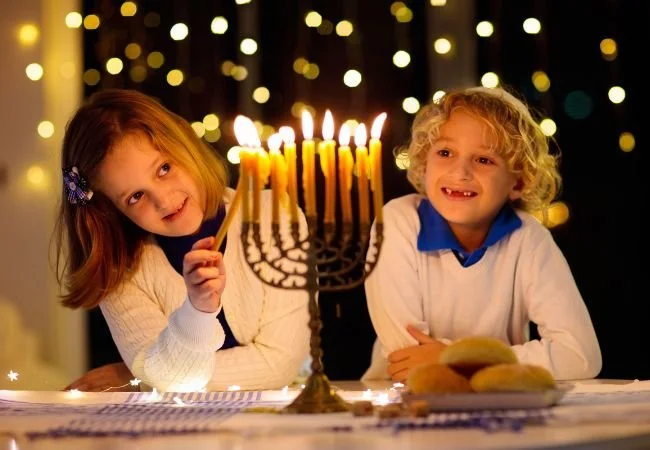
Kids remember the warmth of lighting the candles, eating latkes, singing songs, and spending quality time together far more than who bought which present.
Build Traditions That Make Sense for Your Home
If both parents want to participate in lighting the menorah or other Hanukkah rituals, it is perfectly fine for each home to celebrate in its own way. Traditions do not have to match, and children do not need identical experiences in both households.
You can create new traditions that feel natural and comfortable, such as:
Making latkes or sufganiyot together
Reading a Hanukkah story each night
Choosing one night for giving to charity
Playing dreidel games or creating handmade decorations
Talk with your children to see what traditions they want to do in your home, while ignoring what happens in their other home. When each home feels grounded and peaceful, children learn that Hanukkah can be meaningful anywhere they celebrate.
Explain the Holiday Schedule to Your Child
Children feel more secure when they know what to expect. Before Hanukkah begins, help them understand:
Which nights they will be with each parent
Any traditions or celebrations planned
Who they will see, such as grandparents or extended family
How the plan may differ from previous years
It is normal for children to have mixed feelings, especially if they are missing a familiar tradition on a night they are not with that parent. You can support them by validating their feelings and reassuring them that they will have special celebrations in both homes.
Keep the Emotional Load Off the Child
Children should not feel responsible for managing adult emotions during the holidays. Avoid statements such as:
“I wish you were with me this night instead.”
“I am so sad you will not be here for Hanukkah.”
“Your other parent should have let you stay.”
Although these comments may be unintentional, they create emotional pressure for the child. Keep conversations focused on excitement for the celebrations you do share, not disappointment about what you cannot change.
Take Care of Yourself During the Holiday
If Hanukkah falls on days when you will not be with your children, prepare for that emotionally. Holidays can highlight loneliness or grief, especially for newly separated families.
Support yourself by:
Spending time with friends or family
Attending community events or services
Engaging in traditions independently, like lighting candles or cooking holiday foods
Planning activities that bring comfort or joy
The more grounded you feel, the calmer your interactions with your children will be, and the more positive the holiday experience becomes for everyone.
Stay Focused on What Matters Most
Hanukkah is a holiday about light, resilience, and hope. Co-parenting during the holidays is not about dividing time perfectly or making sure every detail is fair. It is about helping children feel secure, loved, and connected during a meaningful time of year.
When parents focus on the child’s stability, plan the schedule early, avoid competition, and keep emotions in check, the holiday becomes much easier for children to enjoy.
At High Conflict Resolutions, we help co-parents navigate these emotional seasons with clarity and compassion. If you need support building a holiday plan or managing conflict around traditions or schedules, we are here to help.
Together, we can create a Hanukkah experience that protects your child’s peace and honors the heart of the holiday.